
St. Johns County 72-Hour Status
The official SJSO inmate-search page was expressly marked temporarily down as of the research date. No distinct recent-release page or rolling 72-hour view was found on the sheriff's website. The older SmartWeb address referenced in the page source did not return a working public search. St. Johns County therefore has no verified online three-day list to browse.
The sheriff also publishes no known retention statement for released names. It cannot be assumed that a person remains visible for 24, 48, 72, or any other number of hours. Result fields, photos, refresh cadence, and post-release visibility were not inspectable during the outage. Those gaps are part of the local record picture, not details to fill from another Florida county.
That approach is slower than scanning a feed, but it produces a more durable answer. It can also distinguish a true community release from a transfer that merely ended county custody.
Build St. Johns County 72-Hour Results
Begin by defining the exact three-day span. A rolling 72-hour period and three calendar dates are not always the same. Since SJSO supplies neither view online, give Records the start and end dates and ask for the maintained release fields within that range. Then use the Clerk docket and VINE to interpret or cross-check individual events.
- Write down the requested start and end date, including the approximate time if the distinction matters.
- Contact SJSO Records and request booking and release or disposition records for that range. Ask for the release date, time, type, and destination fields as maintained.
- Search the St. Johns County Clerk case system for each person. Compare the case number, charges, and dates before relying on a court event.
- Use Florida VINELink as a custody-status signal when a specific person is known. Do not treat the alert as the formal release record.
- Follow any transfer destination into the correct system. Check FDC for state custody, another sheriff for a county transfer, or the relevant federal or immigration route.
The Jail Releases: 24 Hours page is better suited to an immediate same-day question because it begins with Booking. A three-day reconstruction begins with the record custodian because the event may no longer be current.
Note: State the date span in the request so Records does not have to guess whether "72 hours" means rolling hours or calendar days.
St. Johns County Three-Day Release Fields
No public SJSO 72-hour result fields could be verified. The table below lists the maintained facts that should be requested, not fields promised on a live sheriff screen. Availability can depend on the record, redaction rules, and whether SJSO keeps the item in the requested form.
| Field to request | Use in a 72-hour review |
|---|---|
| Name, aliases, and booking number | Separates people with similar names and ties all facts to one booking. |
| Booking date and time | Distinguishes a release from a new arrest or later booking. |
| Release date and time | Places the event inside or outside the exact three-day span. |
| Release or disposition type | Identifies bond, sentence completion, court release, transfer, or another maintained label. |
| Court and case number | Points to the durable Clerk record that explains the legal action. |
| Receiving agency or destination | Shows when county release was followed by another custodian. |
Ask Records for existing documents, not a new report or opinion. A focused request may seek the booking report and release or disposition record for named people, or records of release events in a defined period if the agency maintains a responsive report. Request electronic copies and a cost estimate before significant charges.
Retain St. Johns County Release Evidence
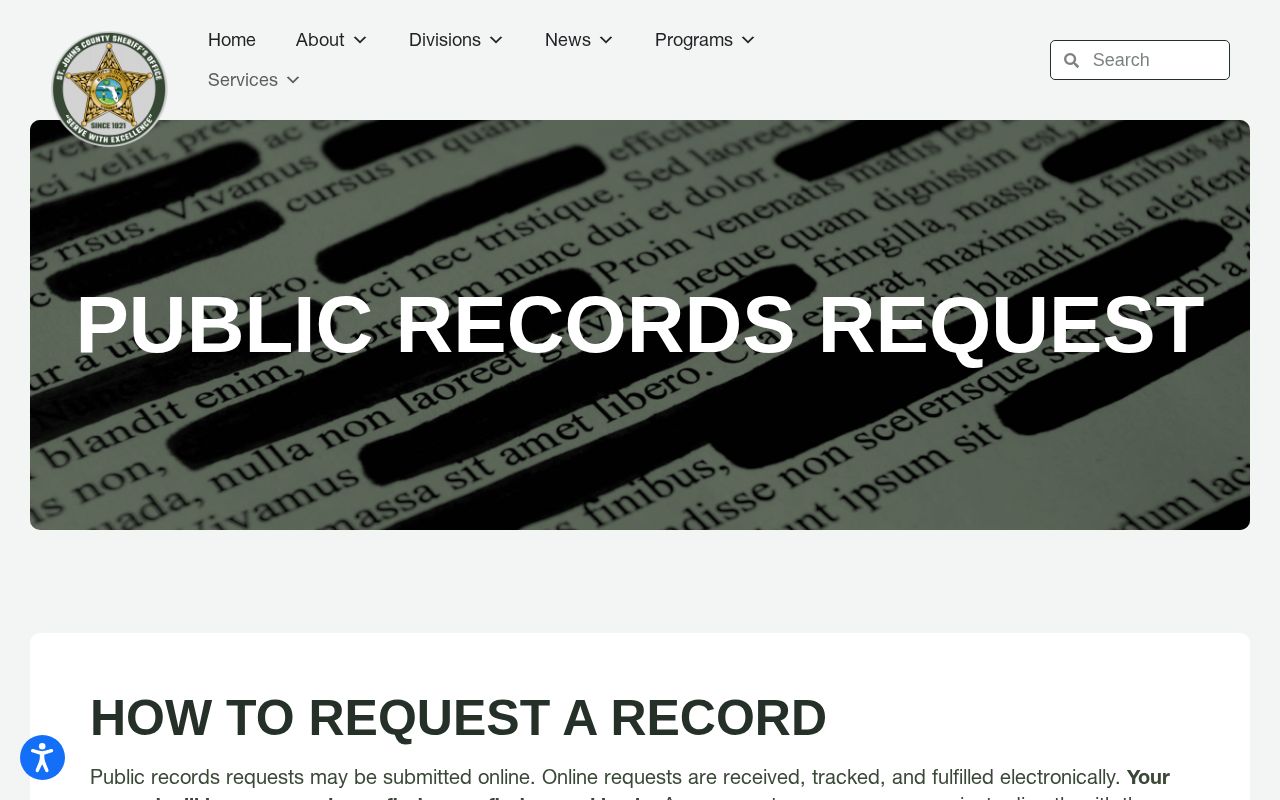
The SJSO public-records route is the core three-day fallback. Its portal supports electronic tracking, communication with the assigned technician, and delivery. Requests are handled in order. Fees may apply, but the reviewed page gives no flat price for a release report, so no standard amount should be assumed.
Alternate Records contacts are 904-810-6610 and SJSORecords@sjso.org. A mailed request may be sent to SJSO, Attn: Records, 900 Law Enforcement Way, St. Augustine, FL 32092. Include a booking or case number when it is known. A narrower date range and clear field list can reduce ambiguity and search work.
The official SJSO request page captured below shows the durable route used after a rolling release window has passed.
Keep the agency response with the matching Clerk case entry. The court record may show a bond order, dismissal, judgment, sentence, probation order, or other action. It does not by itself prove the hour when jail processing ended, so the two records should not be merged into one fact.
Read the docket in date order. A first-appearance or bond event can explain why release became possible, while a later satisfaction or sentence entry may explain a different event. Yet a three-day list built only from docket dates can both omit releases and include people who were not physically discharged in that span. Pair each court event with the sheriff's booking number and timestamp. When the records conflict, ask the originating office to correct or explain its own maintained field rather than choosing the entry that appears first.
St. Johns County Weekend Release Review
A three-day span is often chosen to cover a weekend, but SJSO does not publish a weekend or holiday release schedule. No fixed time of day, discharge door, family waiting point, or lag rule appeared in the reviewed jail sources. It is therefore unsafe to claim that a release will occur on the next business day or appear in a later public list.
Court timing and jail timing are also distinct. A bond or release order may be filed before physical discharge. Staff may still need release authorization, identity checks, property return, and any transfer coordination. The sheriff's timestamp answers when SJSO custody ended. The docket supplies the legal context.
Can three court dates substitute for a 72-hour jail list? No. A filing date is not a jail-release time, and a person may bond out while the case stays open. Use the court record to explain, not replace, the SJSO event.
Note: Do not use an arrest date, news date, or docket filing time as though it were the physical release timestamp.
Classify St. Johns County Release Results
A three-day record set may contain several custody endpoints. Bond, recognizance, time served, sentence completion, and a court-authorized discharge can return a person to the community, subject to any conditions. Transfer means SJSO custody ended while another agency may have taken control. Work release at the CWRC is still county custody, despite the facility name.
| Finding | Meaning and next record |
|---|---|
| Bond or recognizance release | County custody ended under court conditions; the case may remain active. |
| Time served or sentence complete | Compare the SJSO timestamp with the sentencing case. |
| Transfer to FDC | Search the FDC state record after intake; county-jail departure is not state release. |
| Other agency destination | Continue with that custodian before stating community release. |
FDC's offender system excludes ordinary county-jail sentences and county probation. A no-result there does not disprove a St. Johns County booking or release. Federal and ICE locators have separate scope limits as well. The destination field is what tells the researcher which path earns the next check.
St. Johns County Release Feed Gap
The temporary outage and lack of a 72-hour feed create a local data quirk with a clear solution. Booking is strongest for immediate custody or bond status. SJSO Records owns the retained timestamp and release type. The Clerk preserves the durable court action. VINE adds a custody alert or signal but is not the booking report.
This division of labor matters more after several days. A live roster, even when restored, may focus only on current custody. The court case can remain visible much longer, yet it cannot show the exact moment jail staff completed release. A formal SJSO response closes that gap.
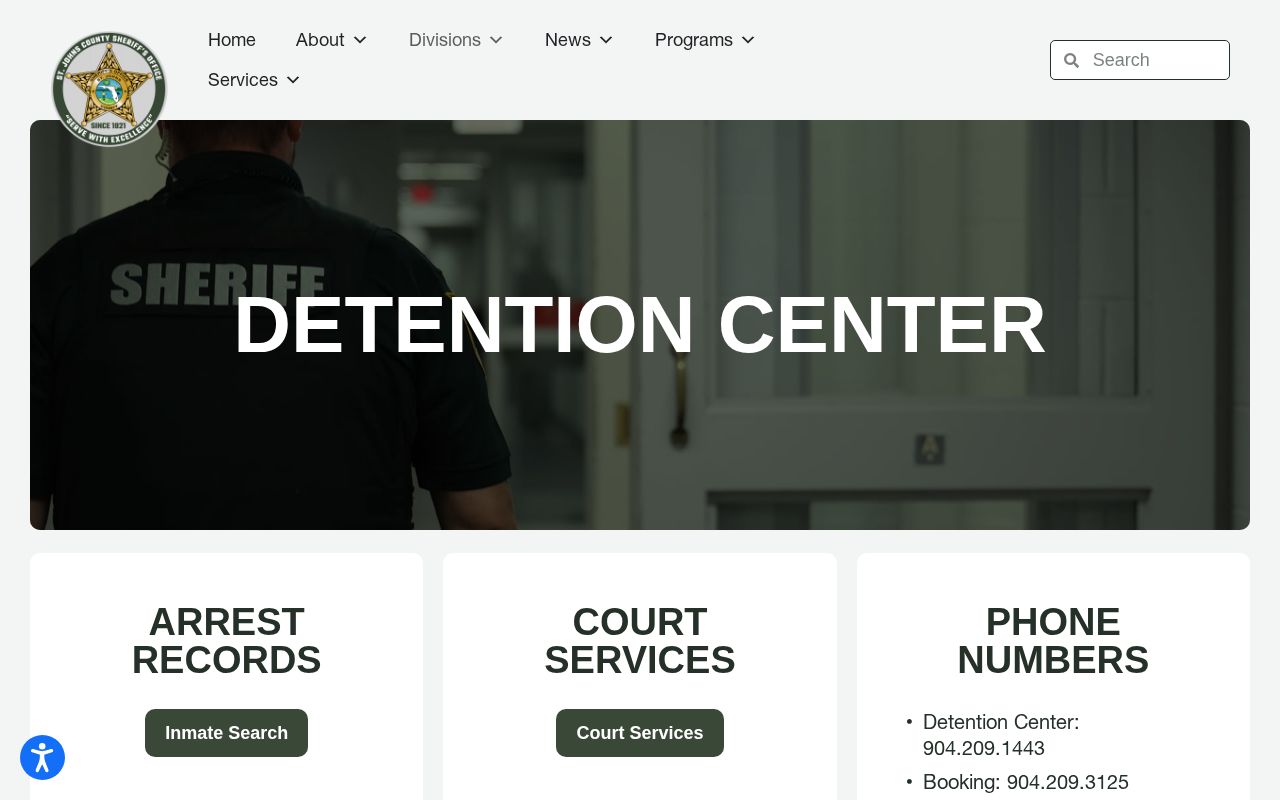
The captured SJSO detention page identifies the Main Detention Unit and CWRC, along with their distinct roles.
For a search focused on one named person across all custody systems, the St. Johns County released-inmate lookup provides the broader county, state, federal, and immigration sequence. A three-day list request should remain anchored to SJSO's retained local records.
Public Record Search
Sponsored Results